

 English
 русский
 Español
How Are Stainless Steel Stamping Parts Used in Assemblies
Small metal components often sit behind larger products and receive little attention during everyday use. In a vehicle, a bracket, clip, support, or protective piece may be hidden after assembly. Electronic equipment has similar parts inside housings, around connectors, or between different structural sections. Although these components are not always visible, their dimensions, shape, surface condition, and material can affect how surrounding parts fit together.
Stainless steel is used in many such applications because its material characteristics suit environments where moisture, handling, and repeated assembly conditions need to be considered. Stamping provides a way to form sheet material into practical shapes while maintaining a repeatable production process.
The relationship between material selection and forming method becomes especially relevant when components need to fit within limited spaces. Automotive and electronic assemblies may have different operating conditions, yet both depend on parts that match the intended structure. This is where Stainless Steel Stamping Parts become part of a broader manufacturing discussion rather than simply a sheet metal product.
Why Are Stainless Steel Stamping Parts Used in Automotive and Electronic Assemblies
Automotive and electronic products contain many components that connect, support, protect, or separate other parts. Some need to remain stable during movement, while others sit inside relatively compact assemblies. The material used for these pieces needs to suit both the physical environment and the way the component will be installed.
Stainless steel can be considered where resistance to moisture and surface deterioration is relevant. It also provides a metal structure that can be formed into brackets, clips, covers, supports, and other shapes. The final part still depends on the design of the assembly, so material selection cannot be separated from the component's intended function.
Stamping is particularly useful when a design begins with sheet material and requires repeated forming into a defined shape. During production, the material may be cut and shaped according to the component design. The resulting part can then move into further processing or assembly.
Several practical factors influence the choice:
- Environmental exposure: Components may encounter moisture, dust, temperature changes, or handling during assembly.
- Available space: Internal vehicle and electronic structures can leave limited room around each component.
- Part geometry: Bends, openings, tabs, and mounting areas affect how the sheet should be formed.
- Assembly method: The part may need to clip, support, cover, or connect with another component.
- Surface condition: Edges and formed areas should suit the way the finished part will be handled and installed.
For automotive applications, vibration and repeated movement can place different demands on a component. Electronic assemblies may instead place greater emphasis on compact dimensions, controlled positioning, and contact with nearby parts. In both cases, the stamped component needs to correspond with its surrounding structure.
How Does Stainless Steel Affect Stamping Part Design
Material behavior has a direct connection with part design. Stainless steel sheet does not behave exactly like every other metal during forming, so designers need to consider how the material will respond around bends, edges, holes, and other features.
A part with several bends may require a different forming approach from a flat cover. A narrow clip may need enough material around its connection area to maintain its intended shape during handling. A bracket with mounting openings needs those openings to remain positioned correctly after forming.
The basic design process can therefore begin with the finished part rather than the stamping operation alone. Designers may ask:
- Where will the component be mounted?
- Which surfaces need to contact other parts?
- Where are bends required?
- Are openings needed for fastening or alignment?
- Which areas may experience repeated handling or movement?
Material thickness also affects the physical structure of the finished component. Changes in thickness can influence bending behavior, rigidity, weight, and the space occupied by the part. The suitable choice depends on the intended application and forming requirements.
Part edges deserve attention as well. Cutting and forming can influence edge condition, particularly around openings and narrow sections. When a component is installed near wiring, plastic housings, seals, or other delicate parts, edge condition can become part of the assembly requirement.
A practical design also needs to account for manufacturing repeatability. A shape that appears simple on a drawing may become more difficult to produce when it contains closely positioned bends or features. Clear relationships between the material, geometry, and forming sequence can make later production planning more straightforward.
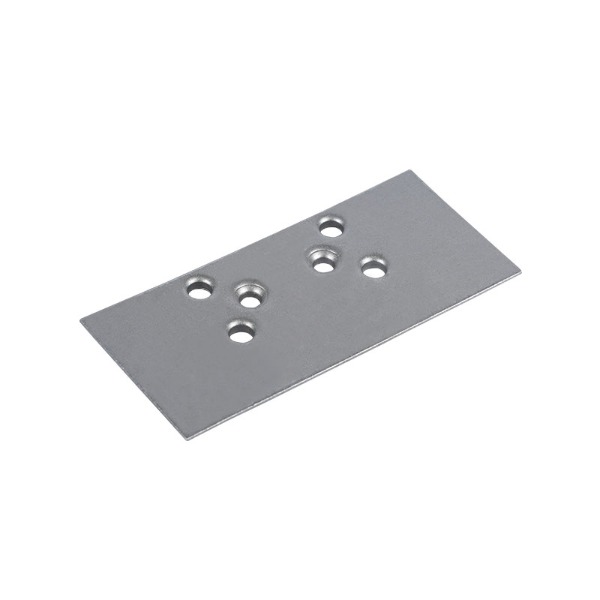
What Shapes Can Be Produced Through Stainless Steel Stamping
Stamping can produce a range of component forms from sheet material. The actual shape depends on the intended assembly and the features required for installation.
Common examples include:
- Brackets for supporting or positioning another component
- Clips for holding parts in place
- Covers for separating or protecting an internal area
- Supports for connecting structural sections
- Terminals for specific connection arrangements
- Shields for separating components or covering selected areas
The shape of each part usually follows a practical purpose. A bracket may contain several bends so that one section attaches to a base while another supports a nearby component. A clip may use a folded section to create controlled contact. A cover can combine flat areas with formed edges to fit around another structure.
Openings are also common in stamped components. They may provide space for fasteners, alignment features, wiring, or other assembly elements. Their location needs to remain consistent with the surrounding design.
| Part Feature | Typical Assembly Consideration |
|---|---|
| Bend | Provides a change in direction for mounting or support |
| Opening | Creates space for fastening, alignment, or passage |
| Tab | Can assist with positioning or connection |
| Flat Section | Provides a surface for contact or mounting |
| Folded Edge | Can add structure around a component boundary |
Part geometry can also affect how a component is handled before installation. A thin clip with a small contact area may need careful handling, while a larger support may require attention to its formed sections.
The production method should follow the geometry rather than forcing every shape into the same process. Where the design is suitable for sheet forming, stamping can provide a practical route from flat material to a finished component. Features that require another type of machining may be handled separately.
How Are Stainless Steel Stamping Parts Used in Automotive Assemblies
Automotive assemblies contain many metal pieces that help position, support, protect, or connect surrounding components. Stamped stainless steel can be used for brackets, clips, mounting pieces, protective covers, and other formed structures where the material and geometry suit the application.
A bracket, for example, may hold a component at a defined location within a vehicle structure. Its bends determine how it sits against the mounting area, while its openings provide points for fastening or alignment. A small change in the formed shape can affect the position of the connected component.
Clips serve a different purpose. They may hold trim, wiring-related parts, covers, or other pieces in place. Their shape needs to provide the intended contact without making assembly unnecessarily difficult.
Environmental conditions also matter. Automotive components can encounter vibration, moisture, dirt, temperature changes, and repeated handling during production and maintenance. A stamped part needs to retain its intended shape and connection with surrounding components under the conditions expected for its use.
For some applications, surface condition is also relevant. A rough or damaged edge may interfere with an adjacent component, while an unsuitable surface condition can affect how a part is handled during assembly.
Automotive design also involves limited installation space. Components often sit close to one another, leaving little room for unwanted movement. For that reason, the dimensions and bends of Stainless Steel Stamping Parts need to correspond with the actual assembly rather than being considered separately.
The electronic sector presents a related challenge, although its requirements can differ. Components inside electronic assemblies may need to occupy compact spaces while maintaining controlled positions around housings, connectors, and internal supports. Moving from automotive applications to electronic assemblies therefore brings attention back to the same fundamental issue: the metal part must fit the structure around it.
Where Do Stainless Steel Stamping Parts Fit in Electronic Assemblies
Electronic assemblies often contain small structural pieces that help keep components in a defined position. A metal clip may hold a part against a housing, while a cover can separate an internal area from nearby components. Brackets and supports can also provide fixed points for assembly.
Space is an important consideration in these applications. Internal components may be placed close together, so the shape of a stamped piece needs to match the available area. A bend that extends too far can interfere with another component, while an opening in the wrong position may make fastening or alignment difficult.
Surface condition can also affect assembly. Metal edges should be suitable for handling and should not create unwanted contact with nearby parts. Where a component sits close to wiring, plastic sections, or other sensitive materials, the condition of the formed and cut areas deserves attention.
Electronic assemblies can also involve different forms of connection. Depending on the design, a stamped component may act as:
- A mounting support
- A retaining clip
- A protective cover
- A connection piece
- A positioning element
- A structural insert
The role of the part determines which features need to be controlled during production. A clip may depend on its formed shape, while a mounting support may require accurate openings and stable contact surfaces.
For Stainless Steel Stamping Parts, the relationship between the finished shape and the electronic assembly is therefore important. The component is not designed simply to occupy a space. Its bends, edges, openings, and contact areas need to work with the parts around it.
How Does Part Geometry Affect Assembly and Connection
Part geometry can influence assembly in ways that are easy to overlook during early design work. Two components may have similar overall dimensions while behaving differently because their bends, tabs, openings, or contact surfaces are positioned differently.
A mounting bracket illustrates the point. Its flat section may rest against a housing, while a bent section supports another component. The angle between these areas determines how the connected parts sit relative to one another.
Openings also have a practical role. A hole may provide room for a fastener, while a narrow slot may help with positioning or adjustment. Tabs can guide a part into place or prevent unwanted movement after assembly.
The surrounding components need to be considered at the same time. A stamped part should have enough clearance for assembly and operation, particularly when nearby components move or need to be removed during maintenance.
Several geometry-related checks can be made during design:
- Identify the surfaces that need direct contact.
- Check the position of bends in relation to nearby components.
- Confirm that openings match the intended fixing arrangement.
- Review the edges around clips and covers.
- Check whether the finished shape can be handled during assembly.
Bending can also affect the final dimensions of a component. When a flat sheet becomes a formed part, the material moves around the bend areas. Design and production teams therefore need to consider the formed condition rather than judging the part only from its original flat layout.
The same principle applies when a design contains features that are not practical to create through stamping alone. In such cases, another machining process may be introduced after or alongside forming.
When Are CNC Stainless Steel Parts Used Alongside Stamped Components
Stamping and CNC machining serve different production needs. Stamping works with sheet material and is well suited to parts built around cutting and forming operations. CNC machining can be considered when a component requires features or shapes that are difficult to obtain through sheet forming.
For example, a design may contain a formed support together with a machined mounting section. Rather than forcing every feature into one process, production planning can divide the work according to the shape and material condition required.
CNC Stainless Steel Parts can be used when a component needs controlled cuts, shaped surfaces, or features that are not convenient to create from a stamped sheet. The process may also fit components made from thicker stainless steel sections.
The choice between the two methods depends on the part itself. Important considerations include:
- Overall geometry
- Material form
- Required openings and cuts
- Mounting surfaces
- Production sequence
- Finishing requirements
- Assembly position
In some assemblies, stamped and machined components may appear next to each other but perform different functions. A formed bracket can provide structural support, while a machined piece may provide a precisely shaped connection area.
Using different processes does not mean that one method replaces another. The production route should follow the actual requirements of the component. A simple sheet-based shape may remain suitable for stamping, while a more complex solid section may call for CNC machining.
For manufacturers, coordinating these processes also requires attention to the transition between operations. A part may need cleaning, inspection, surface treatment, or additional fitting before it moves into final assembly.
What Production Checks Help Maintain Consistent Stainless Steel Parts
Production checks begin with the material and continue through forming, cutting, handling, and inspection. Each stage can affect the condition of the finished component.
Material should be checked for visible damage and suitability for the intended forming process. During stamping, attention can be given to part shape, bends, openings, edges, and areas where the sheet has been formed.
Deformation is another practical concern. A component may develop unwanted changes in shape during forming or handling. Such changes can make a bracket difficult to mount or cause a cover to sit incorrectly.
Surface condition should also be reviewed. Scratches, dents, burrs, or contamination can create problems when the part comes into contact with another component.
A basic inspection sequence can include:
- Checking the incoming sheet condition
- Reviewing formed dimensions
- Inspecting bends and edges
- Checking openings and mounting features
- Looking for visible surface damage
- Confirming the part fits the intended assembly
Machined components require similar attention to their finished shape and surfaces. When CNC Stainless Steel Parts are used alongside stamped pieces, the two types need to correspond at their connection points.
Inspection is therefore connected with assembly rather than being an isolated production step. A component that appears acceptable on its own still needs to fit the surrounding structure.
How Do Automotive and Electronic Requirements Influence Production
Automotive and electronic assemblies share a need for controlled component dimensions, suitable materials, and reliable physical connections, yet their working environments can differ.
Vehicle components may experience vibration, moisture, dirt, temperature changes, and repeated movement. Parts used in these locations need to be designed around the conditions expected in the relevant assembly.
Electronic components may operate within enclosed housings where space is limited. Internal parts can sit close to wiring, connectors, covers, and other structural elements. Small changes in shape may therefore affect assembly clearance.
The production process should reflect these differences. For automotive parts, attention may focus on mounting stability, environmental exposure, and repeated movement. For electronic parts, compact geometry, positioning, edge condition, and internal clearance may receive greater attention.
Material handling also differs according to the component. A thin formed clip can require different handling from a larger support. Finished parts should be protected from unnecessary bending, impact, or contamination before assembly.
Such requirements can influence whether a component is stamped, machined, or produced through a combination of processes. The intended environment remains an important reference throughout production planning.
How Should Manufacturers Coordinate Stamping and CNC Processing
When a component contains both formed and machined features, production planning can divide the work according to the geometry of each area. Stamping may handle sheet-based bends and openings, while CNC processing can address sections that require a different form of cutting or shaping.
The sequence needs to account for how one operation affects the next. A formed part may need to maintain its shape before machining takes place. A machined surface may need protection during later handling. Connection areas should be checked after both processes have been completed.
Coordination can focus on several practical points:
- Review the complete component design before selecting the process.
- Separate features according to their manufacturing requirements.
- Check how forming may affect later machining.
- Protect finished surfaces during movement between operations.
- Inspect connection areas before assembly.
- Confirm that the final component matches the surrounding structure.
Stainless Steel Stamping Parts remain closely connected with sheet-based forming requirements, while CNC Stainless Steel Parts can address different shapes and machining conditions. Treating the two processes as parts of one production plan can help avoid unnecessary changes during assembly.
The same approach applies across automotive and electronic manufacturing. Rather than selecting a process based only on the appearance of an individual component, production teams can consider its material, geometry, installation position, surrounding parts, and manufacturing sequence together. This creates a clearer connection between part design and the conditions under which the finished assembly will be produced and used.

 Yongkang Ruizan Industry and Trade Co., Ltd.
A company specializing in metal stamping and mold design and manufacturing.


- Phone: +86-18072455799
- Email: [email protected]
- Address: No. 23, Qilong Road, Natural Village, Zhiying Town, Yongkang City, Jinhua City, Zhejiang Province, China
Copyright © Yongkang Ruizan Industry and Trade Co., Ltd. All Rights Reserved.

Custom Stamping Sheet Metal Hardware Machining Factory