

 English
 русский
 Español
Can Iron Pipe Hooks Work for Bikes and Ladders
Storage hooks are often used when floor space is limited and larger items need to be moved away from walking areas. An iron pipe hook usually has a curved section for holding an object and a fixing section that connects with a wall, frame, or other support. Its actual use depends on the shape of the hook, the way it is installed, and the object placed on it.
Bicycles and ladders are common examples of items that may need wall storage. Both have long or uneven shapes, making ordinary shelves less convenient in some storage spaces. A hook can create a simple hanging point, allowing an item to stay against or slightly away from a wall.
Several factors affect whether a hook suits a particular storage task:
- Shape of the item being stored
- Contact area between the hook and the item
- Position of the fixing point
- Condition of the supporting surface
- Ease of placing and removing the item
A hook should not be selected by appearance alone. A narrow hook may work with a small contact area, while a wider curved section may be more suitable for a larger frame or ladder rail. Storage habits also matter because repeated lifting and removal can place different demands on the connection.
Can Iron Pipe Hooks Hold Bicycles Safely
A bicycle has several possible contact points, although not every part is suitable for hanging. Frame shape, wheel position, handlebar width, and nearby components can affect how the bicycle sits once lifted from the floor.
Many storage arrangements place the hook against a solid section of the bicycle frame or use another suitable support point. A good position allows the bicycle to remain stable without forcing one part of the frame into an awkward angle. Contact with sharp edges should also be avoided when the storage arrangement could cause rubbing during placement or removal.
Hook depth matters as well. A shallow curved section may allow an item to move away from its resting position, while a deeper section can provide a more enclosed contact area. Neither shape automatically suits every bicycle, since frame design varies.
Wall position also changes the storage experience. A hook installed too close to nearby objects can make the bicycle difficult to lift into place. A suitable arrangement leaves enough room for the wheels, handlebars, and other parts to move without striking shelves, walls, or neighboring equipment.
For shared storage areas, placement should also account for people walking nearby. A bicycle hanging at an awkward height can create an obstruction, especially when handlebars or pedals extend outward.
Are Iron Pipe Hooks Suitable for Hanging Ladders
Ladders create a different storage problem because their length and shape can make them difficult to support from one point. A hook may be useful when the ladder has a suitable rail or frame section for contact, although the storage arrangement needs to prevent unwanted movement.
Long items can rotate when lifted or removed. A single hanging point may allow one end to swing, particularly when the ladder is moved by hand. Using more than one support point can help distribute contact along its length and keep the stored position more controlled.
Ladder storage should also consider the direction in which the item is placed. Horizontal storage may require two or more hooks positioned along a wall, while vertical storage depends more heavily on the lower support and upper fixing point.
A suitable hook should provide enough contact without making removal unnecessarily difficult. A very narrow opening may complicate placement, while an excessively open shape may allow greater movement during storage.
Compared with bicycle storage, ladder storage places greater attention on length, balance, and support spacing. A ladder can also occupy a wider area when being removed, so surrounding clearance needs to be considered before fixing hooks to a wall.
How Does Hook Shape Affect Hanging Performance
Hook shape directly influences how an item rests after placement. Curved sections can create a broader contact path, while a smaller opening may keep an object closer to a fixed position. Width and depth also influence how easily an item can be lifted onto the hook.
For bicycle storage, the shape needs to work with the selected frame section or another suitable contact point. A curved hook can follow part of a rounded surface, while a wider opening may make repeated placement easier.
Ladders require another approach. Rails may be wider and longer, so the hook needs enough room to receive the rail without forcing it into an unusual position. When two hooks are used, matching their height and position becomes important for keeping the ladder reasonably balanced.
Shape can also affect the way pressure is distributed. A narrow contact point may place more pressure on a small area of the stored object, while a broader contact area can spread contact across a larger section. Surface condition should be considered along with shape, especially when painted or finished surfaces may rub against the hook during repeated use.
What Should Be Considered When Choosing Iron Pipe Hooks
Selecting a hook for bicycle or ladder storage involves more than checking whether the object can physically fit. The relationship between the hook, mounting surface, stored item, and daily handling routine needs to make sense as a complete arrangement.
For bicycles, useful questions include:
- Where will the bicycle make contact with the hook?
- Can the frame remain stable after lifting?
- Will the wheels or handlebars interfere with nearby objects?
- Can the bicycle be removed without excessive movement?
For ladders, attention shifts toward support spacing, length, and balance. Two support points may create a different storage arrangement from a single hook, especially when a long ladder needs to remain close to a wall.
Mounting location deserves equal attention. A hook fixed to a weak or unsuitable surface may not provide reliable support regardless of its shape. The fixing method should match the wall or frame structure, while surrounding space should remain clear enough for normal handling.
Iron pipe hooks can therefore work for both bicycles and ladders in suitable storage arrangements. Their usefulness depends on matching hook dimensions, shape, mounting conditions, and contact position with the item being stored. A practical setup begins with the storage task rather than assuming one hook design can serve every purpose.
How Does Installation Affect Bicycle and Ladder Storage
Installation has a direct effect on how a hanging storage system behaves during daily use. A hook may have a suitable shape, yet an unsuitable mounting position can make lifting, placing, or removing an item uncomfortable. Wall condition, fixing direction, spacing, and surrounding clearance all need to fit the intended storage method.
Bicycle storage usually requires enough room for the frame and wheels to move into position. Handlebar width can also affect the required clearance, especially when another bicycle, shelf, or wall‑mounted object is nearby. Placing hooks at a practical height can make lifting easier while keeping the stored bicycle away from common walking paths.
Ladder storage needs a slightly different arrangement because of its length. Two support points along a wall can help keep a ladder from turning during storage. Distance between the hooks should relate to the ladder structure rather than being chosen without considering its length and balance.
Vertical storage can work where wall height is available, while horizontal storage may suit a wider wall with enough open space. A ladder stored horizontally also needs room for both ends during removal. Nearby doors, shelves, and other stored items should be considered before installation.
How Can CNC Processing Service Support Hook Production
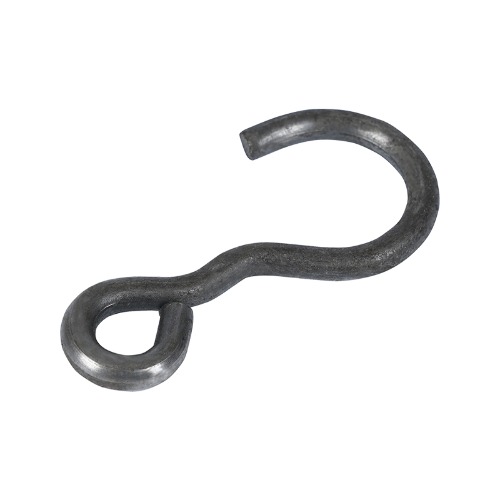
CNC Processing Service can be used when a hook requires controlled shaping, drilling, cutting, or adjustment of individual parts. For storage hooks, dimensions often need to match the mounting structure and the object being held, so consistent processing can matter during production.
A simple hook may require only basic shaping and mounting holes. A more specific design can involve several connected dimensions, such as the opening width, curved section, fixing area, and distance between mounting points. Each part affects how the finished hook sits on a wall or frame.
CNC processing can also support changes between different hook sizes. A storage project may require one shape for bicycles and another for ladders, even when both products use a similar basic structure. Adjusting dimensions during production allows the design to follow the intended storage arrangement.
Several areas may receive attention during processing:
- Mounting hole position
- Hook opening and depth
- Edge condition
- Overall dimensions
- Connection between the fixing section and hanging section
Such details can influence installation and daily handling. A hole positioned away from its intended fixing point can affect mounting, while an unsuitable hook opening can make repeated placement inconvenient.
For manufacturers, CNC Processing Service can therefore be part of a production process where hook dimensions need to follow a particular drawing or storage requirement. Processing itself does not determine whether a hook is suitable; the finished dimensions still need to match the actual application.
Which Material And Surface Factors Matter
Iron‑based hooks are commonly considered for storage structures because the material can form rigid support components. Still, material selection should relate to the environment where the hook will remain.
Indoor storage usually presents fewer environmental concerns than a damp or semi‑open location. Moisture can affect exposed metal surfaces over time, while dust and frequent contact may change surface condition. A suitable surface treatment can help protect the exposed area, depending on the intended environment.
Contact with stored objects also deserves attention. A bicycle frame or ladder rail may have a finished surface that can be marked by repeated rubbing against a hard hook. Adding a suitable protective layer or contact material can reduce direct friction during regular placement.
Surface edges should be checked as well. Sharp or uneven areas can make handling less comfortable and may damage nearby surfaces. Smooth contact areas can make repeated storage easier without changing the basic structure of the hook.
Material and surface decisions are therefore connected to location, handling frequency, moisture exposure, and the type of object being stored.
How Should Bicycles And Ladders Be Arranged
Storage layout determines how easily an item can be placed on or removed from a hook. A bicycle needs enough surrounding space for its wheels, frame, and handlebars, while a ladder requires attention to its long body and both ends.
For bicycle storage, leaving clear space around the handlebars can prevent contact with nearby objects. Pedals and wheels may also extend beyond the main frame, so the usable area should not be judged only by the wall position of the hook.
Ladder storage requires more attention to its overall length. When supported horizontally, hooks should be positioned where the ladder can rest without excessive movement. When stored vertically, the upper support and lower resting area need to work together.
A practical arrangement can consider:
- Walking paths around the storage area
- Door movement
- Distance from nearby shelves
- Space needed during lifting
- Position of surrounding equipment
Keeping stored items in a planned area can also reduce accidental contact. A bicycle should not block access to a ladder, while a ladder should not extend into a passage used regularly.
What Makes A Hook Suitable For Different Storage Needs
Suitability depends on how the hook works with the stored item and its mounting location. Iron pipe hooks can serve different storage purposes when their dimensions and shape match the object being supported.
| Storage Factor | Bicycle | Ladder |
|---|---|---|
| Main concern | Frame contact and balance | Length and support spacing |
| Hook position | Near a suitable frame section | Along a suitable rail or frame |
| Space requirement | Clearance for wheels and handlebars | Clearance for both ends |
| Support method | One or more contact points | Often benefits from multiple support points |
| Handling focus | Lifting and removing the bicycle | Controlling movement during placement |
| Surface concern | Preventing rubbing on finished parts | Protecting rails and contact areas |
A bicycle and a ladder may both be stored on a wall, yet their physical structures create different requirements. A hook that fits one application may need changes before being used for another.
Production requirements can also influence the final design. When a project calls for a particular opening, mounting position, or curved section, CNC Processing Service can help produce parts according to the required dimensions. Material condition and surface treatment then need to match the storage environment.
Before choosing a hook, it is useful to consider the complete storage process: how the item reaches the hook, where contact occurs, how it stays in position, and how it will be removed later. Such questions provide a clearer basis for selecting a suitable structure than relying on the hook name alone.
Iron pipe hooks can be used for hanging bicycles and ladders when the design, mounting method, material condition, and available space fit the intended task. Bicycle storage tends to focus on frame contact and surrounding clearance, while ladder storage places greater attention on length, support spacing, and movement. A careful match between hook structure and storage conditions can make both arrangements easier to manage during everyday use.

 Yongkang Ruizan Industry and Trade Co., Ltd.
A company specializing in metal stamping and mold design and manufacturing.


- Phone: +86-18072455799
- Email: [email protected]
- Address: No. 23, Qilong Road, Natural Village, Zhiying Town, Yongkang City, Jinhua City, Zhejiang Province, China
Copyright © Yongkang Ruizan Industry and Trade Co., Ltd. All Rights Reserved.

Custom Stamping Sheet Metal Hardware Machining Factory