

 English
 русский
 Español
How Do CNC Stainless Steel Parts Improve Precision In Manufacturing Processes
Precision is often noticed only when something does not fit well. A drawer that sticks slightly, a machine part that vibrates, a connector that feels loose during installation. Behind these small details, CNC Stainless Steel Parts are commonly used because they help keep shapes consistent from one piece to another.
In real manufacturing work, even a small deviation can affect how two parts meet. A hinge may feel smooth on one unit and slightly stiff on another. A housing cover may sit flush in one product while leaving a visible gap in another. These differences usually come from small variations during machining.
Stainless steel components made through CNC processes reduce that inconsistency because each movement of the cutting tool follows a controlled path rather than manual adjustment.
What CNC Stainless Steel Parts actually mean in practical terms
In simple terms, CNC Stainless Steel Parts are metal components shaped by machines that follow programmed instructions. A cutting tool moves across stainless steel based on digital coordinates, removing material step by step until the final shape is formed.
Stainless steel is often selected because it does not easily deform during cutting. When a softer material bends or shifts under pressure, the final shape can drift slightly. With stainless steel, the structure stays more stable while being processed, which helps maintain the intended geometry.
In daily use, these parts often appear inside things that do not look complex from the outside:
- hinges inside doors that open and close smoothly
- connectors inside electrical housings
- shafts inside small mechanical devices
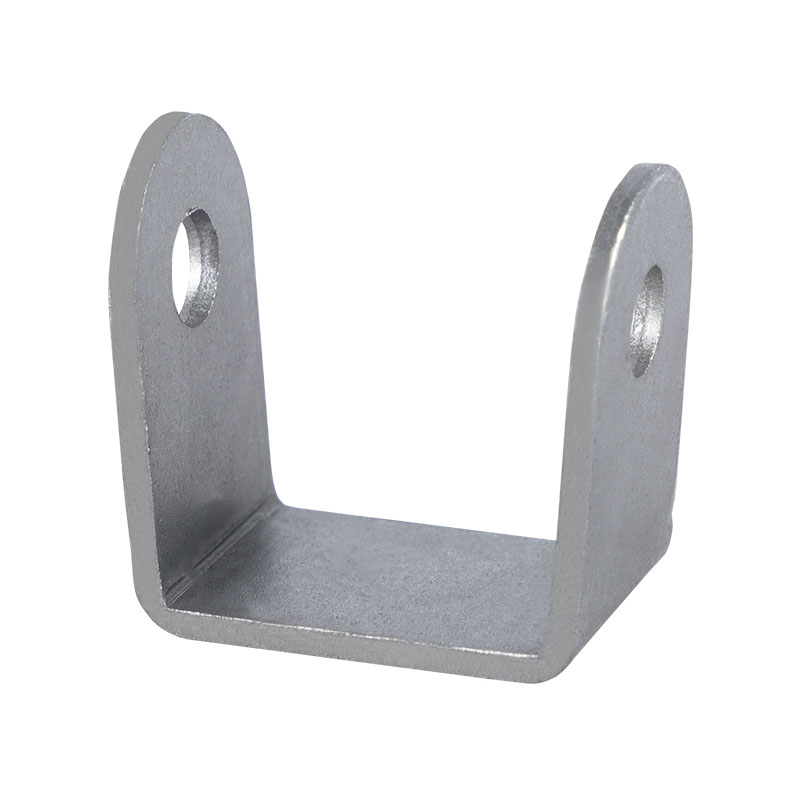
- brackets that hold components in place
Even though these parts are hidden, their dimensional accuracy affects how the whole product feels during use.
How machining stability affects the final shape
During machining, the cutting tool applies force directly onto the metal surface. If the material reacts too much under pressure, tiny shifts happen during cutting. Those shifts may not be visible immediately, but they affect how tightly parts fit later.
Stainless steel behaves differently because it resists bending and holds its form under pressure. That resistance helps the tool follow the planned path more closely.
In real workshop conditions, stability shows up in a few noticeable ways:
- edges come out cleaner with fewer uneven marks
- holes align more consistently with design positions
- flat surfaces sit more evenly when assembled
- repeated parts look and behave nearly the same
A technician working on assembly lines can often tell when machining stability is poor. Parts may require extra adjustment, filing, or force during fitting. Stable CNC stainless steel machining reduces that extra work.
| Production factor | What happens during machining | What it changes in real use |
|---|---|---|
| Material rigidity | Steel holds shape under cutting force | Parts fit more predictably |
| Tool movement control | Machine follows fixed path | Less variation between parts |
| Heat during cutting | Material resists distortion better | More stable final dimensions |
| Repeated production | Same motion repeated across cycles | Consistent part replacement |
Where people actually notice CNC stainless steel accuracy
In everyday environments, precision is not usually discussed directly, but it is felt through product behavior.
A common example is door systems. When stainless steel components inside hinges are precisely machined, the door closes without uneven resistance. If the machining is inconsistent, the same door may feel slightly different depending on alignment.
Another example appears in small appliances. Internal metal parts guide movement or hold assemblies in place. When those parts are not consistent, vibration or noise may appear during operation.
Even simple handheld tools rely on this precision. A poorly aligned metal joint can cause uneven force distribution, making usage feel unstable over time.
Why stainless steel is often chosen for CNC machining work
Stainless steel is not selected only for appearance or corrosion resistance. In machining, its internal structure helps maintain shape during cutting and after installation.
Some practical reasons include:
- it does not easily bend under tool pressure
- it maintains shape under repeated load
- it works well for tight-fitting assemblies
- it supports stable surface finishing after machining
In many workshops, this makes it suitable for parts that need to stay accurate even after long-term use inside machines or structures.
How CNC processing changes consistency in real production
Before CNC systems became common, small differences between parts were more frequent. Manual adjustment depended heavily on individual skill and working condition.
With CNC machining, movement becomes coded. Once a design is entered, the machine repeats the same path for each piece. Even when production continues for long periods, the motion pattern does not change easily.
In real factory environments, this shows up as:
- fewer adjustments needed during assembly
- reduced mismatch between identical parts
- smoother installation into larger systems
- less variation between replacement components
These effects are not always visible at the machining stage, but they become clear during final assembly and long-term use.
How CNC Parts Processing Factory keeps output from drifting in real production
In real workshop conditions, machining does not stay constant by itself. Tool wear, small alignment shifts, and long running time all slowly affect output. A CNC Parts Processing Factory deals with these changes through routine control rather than single adjustments.
Machines are checked before and during production cycles. Tool positions are corrected when small deviations appear. Stainless steel processing especially demands attention because cutting resistance can change tool condition faster than softer materials.
What matters in daily operation is not only the machine capability, but how stable the process stays across repeated runs. Even when the same program is used, small variations can appear if monitoring is not active.
Common control actions include:
- periodic tool calibration during operation
- checking alignment between machine axis and workpiece
- adjusting tool wear impact during long machining runs
- keeping cutting conditions consistent across batches
In practical terms, this is what helps identical parts remain truly identical when produced at different times.
How tight tolerance is maintained in stainless steel CNC parts
In many mechanical assemblies, parts must fit together without force or gaps that feel uneven. CNC Stainless Steel Parts are often used because they can maintain tight dimensional control during shaping.
Stainless steel helps in this process because it does not deform easily under cutting pressure. Combined with CNC control, machining paths stay close to design geometry without drifting during operation.
Tolerance control becomes noticeable in real fitting work. A shaft slides into a housing without extra grinding. A bracket aligns without visible offset. Even small fastening points match their positions without adjustment.
In production practice, tolerance stability depends on:
- rigid material structure during cutting
- consistent tool movement path
- controlled heat behavior during machining
- repeatable production settings
When these factors stay stable, parts can be assembled directly without extra correction steps.
How surface quality changes how parts behave after assembly
Surface condition is not only about appearance. In mechanical systems, smoothness affects friction, movement, and long-term wear.
CNC machining on stainless steel often produces surfaces that require less additional finishing. When surface irregularities are low, parts slide or connect more smoothly during assembly. That reduces stress on contact points.
In real applications, surface quality affects:
- how smoothly moving parts interact
- how tightly components connect without forcing
- how long surfaces resist wear during operation
- how stable assemblies remain after repeated use
For example, a rotating joint with uneven machining marks may slowly generate resistance noise. A smoother surface reduces that effect and allows more stable movement over time.
How CNC stainless steel parts improve assembly accuracy in real systems
Assembly is where machining accuracy becomes visible. Even if a part looks correct individually, mismatched dimensions can appear when multiple components come together.
CNC Stainless Steel Parts reduce this problem because dimensions stay consistent across production cycles. When parts match their design positions closely, assembly becomes more direct.
In real production environments, this shows up in practical ways:
- faster fitting between components without rework
- fewer alignment corrections during installation
- smoother integration into mechanical structures
- reduced variation between replacement parts
A technician assembling equipment can often notice when parts are well-machined. Holes align without force, edges meet evenly, and movement feels controlled rather than forced.
How manufacturing demand continues to shape CNC stainless steel usage
As product design becomes more compact and mechanically dense, internal parts carry more responsibility. Even small components influence how the entire system behaves.
CNC Stainless Steel Parts are increasingly used in places where stability cannot be adjusted after assembly. Once installed, they need to maintain shape and position for long periods.
This shift is visible in many systems where:
- internal space becomes tighter
- parts interact more closely with each other
- movement systems require smoother operation
- replacement accuracy becomes more important
Instead of treating machining as a separate step, production now connects design, machining, and assembly more closely. CNC control and stainless steel stability fit into that direction naturally, since both support repeatable accuracy without constant adjustment.

 Yongkang Ruizan Industry and Trade Co., Ltd.
A company specializing in metal stamping and mold design and manufacturing.


- Phone: +86-18072455799
- Email: [email protected]
- Address: No. 23, Qilong Road, Natural Village, Zhiying Town, Yongkang City, Jinhua City, Zhejiang Province, China
Copyright © Yongkang Ruizan Industry and Trade Co., Ltd. All Rights Reserved.

Custom Stamping Sheet Metal Hardware Machining Factory